
Shadow AI in Financial Services: What to Do About It
Why shadow AI is a specific risk for banks and financial institutions - PII, PCI, and material nonpublic information leaving the organization through unsanctioned AI tools - and what compliance and risk teams can do about it.
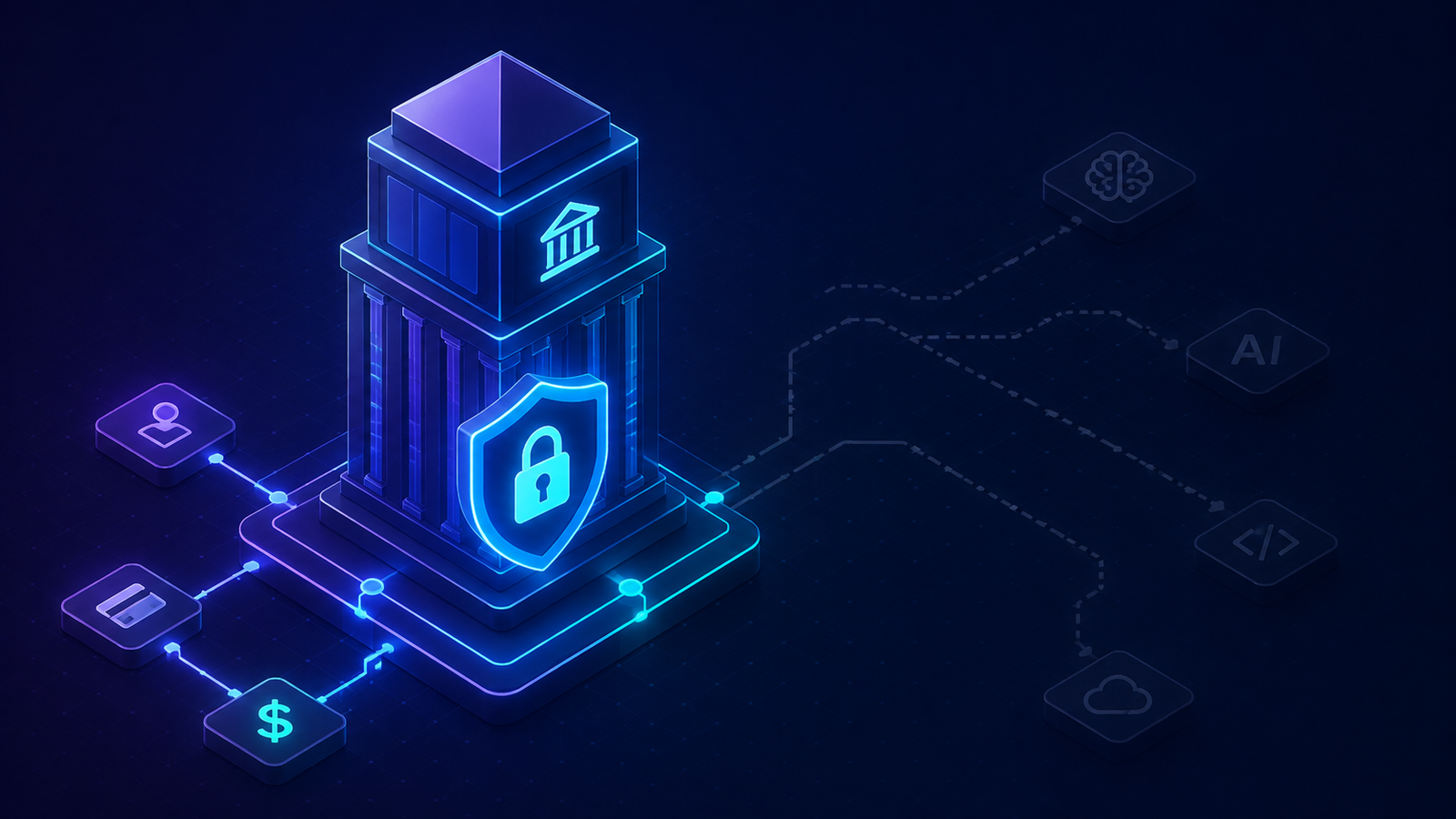
Shadow AI isn't unique to finance, but the stakes are higher there than almost anywhere else: the data employees paste into an unsanctioned AI tool can be client PII, account numbers, or material nonpublic information, not just internal notes.
Quick Answer
Shadow AI in financial services refers to employees using unsanctioned AI tools (personal ChatGPT accounts, browser extensions, unapproved copilots) to handle client or firm data, without the institution's visibility, access controls, or audit trail. The risk is elevated in finance because the data involved is often regulated (PII, PCI, material nonpublic information), and the fix is rarely "ban AI" - it's giving teams a sanctioned way to use it that's actually as convenient as the unsanctioned option.
Why finance is a special case
Most industries worry about shadow AI leaking internal notes or draft documents. Financial services teams are often one careless paste away from exposing client PII, account or transaction data, or details covered by PCI or securities regulations - the kind of exposure that isn't just embarrassing, it's reportable.
Why banning AI doesn't work
Employees don't use shadow AI out of recklessness - they use it because the sanctioned alternative is slower or doesn't exist. Banning AI outright tends to just push usage further underground, onto personal devices and personal accounts where there's even less visibility than before.
What actually reduces the risk
- Give teams a sanctioned option that's genuinely convenient. If the approved tool is slower than a personal ChatGPT account, people will use the personal account.
- Control what data reaches the model, not just which tool is approved - masking or blocking PII, PCI, and account-level data before it ever reaches an AI system.
- Keep a record of what was asked and what data was involved, so compliance and audit have something to review after the fact, not just a policy document nobody follows.
- Make the policy specific to financial data types, not a generic "use AI responsibly" memo - name PII, PCI, and MNPI explicitly.
Where this connects to Dapto
Dapto's financial services page covers how banks and financial institutions let advisory, client service, and reporting teams use tools like ChatGPT, Claude, or Gemini while keeping PII, PCI, financial records, and IP from leaving the organization.
FAQ
Is shadow AI a bigger risk in finance than other industries?
The behavior is the same across industries, but the data at risk is often more sensitive and more regulated in finance - which raises both the likelihood of a reportable incident and the cost of one.
Does banning ChatGPT and similar tools solve the problem?
Usually not on its own. It tends to push usage onto personal, unmonitored accounts rather than eliminating it. A sanctioned, genuinely convenient alternative combined with data-level controls is more effective than a ban alone.
Read next
What is shadow AI? covers the general problem in depth. How to build an AI governance policy walks through writing the policy itself.
See how this applies in practice with Dapto's approach to regulated industries - how teams in financial services use GenAI without leaking PII, PCI, or IP.
Learn more