
What Is AI Agent Governance? Why 40% of Agent Projects Get Canceled
Gartner predicts over 40% of agentic AI projects will be canceled by 2027. Weak governance is the primary driver. Learn what AI agent governance means and how to implement it before your projects fail.
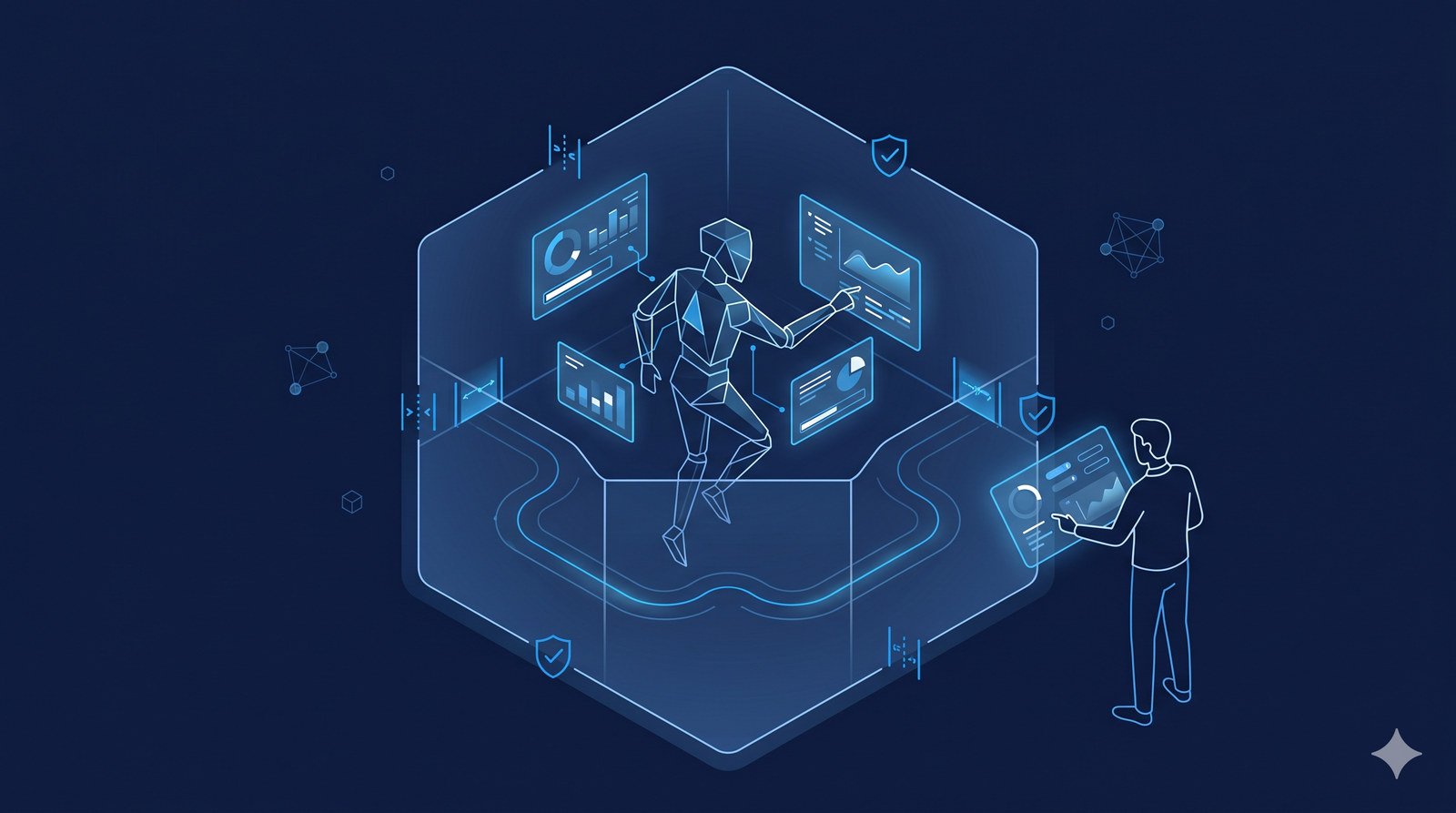
Over half of enterprises now have AI agents running in production. These agents browse the web, access databases, execute code, send communications, and make decisions with increasing autonomy.
But only 21% of companies have a mature governance model for their AI agents, according to Deloitte. And Gartner projects that over 40% of agentic AI projects will be canceled by 2027, with unclear business value and weak governance as the primary drivers.
The gap between agent deployment and agent governance is creating a wave of failures that could have been prevented. This article explains what AI agent governance actually means, why it matters more for agents than for traditional AI tools, and how to implement it practically.
Why Agents Need Different Governance Than Chatbots
Traditional AI governance focused on chatbots and copilots is not sufficient for autonomous agents. The difference comes down to scope of action.
A chatbot generates text. If it produces something wrong, a human reviews it before anything happens. The blast radius of a chatbot error is limited to the quality of a single output.
An agent takes action. It can update databases, send emails, trigger workflows, access sensitive data, make API calls, and execute code. When an agent makes an error, the consequences are not limited to a bad text output. They can affect real systems, real data, and real customers.
This distinction changes what governance needs to cover. Chatbot governance asks: "Is the output accurate and appropriate?" Agent governance asks: "What did the agent do, why did it do it, what data did it access, what actions did it take, and can we undo those actions if something went wrong?"
The Five Pillars of AI Agent Governance
Effective agent governance rests on five capabilities that work together.
1. Audit Trails
Every action an agent takes should be logged with enough detail to reconstruct what happened and why. This includes the user request that initiated the workflow, every tool the agent used, every data source it accessed, every decision point where it chose one path over another, and the final output it delivered.
Without audit trails, you cannot answer basic questions when things go wrong. Which agent accessed customer data at 3 AM? Why did the research agent cite a source that turned out to be unreliable? What prompted the sales agent to send that email to a prospect? These questions are unanswerable without comprehensive logging.
Audit trails also serve compliance requirements. Regulated industries need to demonstrate to auditors that AI systems operate within defined boundaries. "We do not know what the agent did" is not an acceptable answer during an audit.
2. Policy Enforcement
Agents need guardrails that prevent them from taking actions outside their authorized scope. Policy enforcement defines what each agent can and cannot do, and enforces those limits technically rather than relying on the AI model to police itself.
Practical policy enforcement includes data access controls (which data sources each agent can read and write), action restrictions (which tools and APIs each agent can call), spending limits (how much compute or API cost each agent can consume per task), output restrictions (what types of content agents can generate or send externally), and escalation rules (when agents must pause and request human approval before proceeding).
Without policy enforcement, an agent with access to your CRM could theoretically email every customer in your database. An agent with database access could modify records it was only supposed to read. These scenarios sound extreme, but they are exactly the kind of unintended behavior that emerges when agents operate without clear boundaries.
3. Data Protection
Agents process data as part of their work. Governance must ensure that sensitive data is protected throughout the entire workflow.
This means automatic PII detection and redaction before data reaches external AI models, data classification that determines which agents can access which data categories, encryption for data in transit and at rest, retention policies that define how long agent interaction logs are stored, and compliance with relevant regulations (GDPR, HIPAA, SOC 2) for every data interaction.
Data protection for agents is more complex than for chatbots because agents often combine data from multiple sources in a single workflow. A research agent might pull customer data from a CRM, financial data from a database, and public data from the web, then synthesize all of it into a report. Each data source may have different sensitivity levels and handling requirements.
4. Cost Visibility
Agents consume computational resources. Multi-agent systems that deploy parallel agents can consume significant token budgets in a single task. Without cost visibility, spending can grow unpredictably.
Governance should provide per-agent cost tracking (how much each agent spends per task), per-team cost tracking (total AI spend by department), per-model cost tracking (which models consume the most budget), anomaly detection (flagging tasks that consume unusually high resources), and budget controls (hard limits that prevent runaway spending).
The shift to token-based pricing makes cost visibility even more critical. When costs correlate directly with usage volume, an agent that enters an unproductive loop can burn through budget quickly. Cost controls that automatically stop agents when they exceed defined thresholds prevent these scenarios.
5. Human Oversight
Full autonomy does not mean zero oversight. Effective governance defines when agents can act independently and when they must pause for human review.
Low-risk, routine tasks (data classification, report formatting, information retrieval) can run fully autonomously. Medium-risk tasks (sending external communications, updating CRM records, making recommendations) should include human review before execution. High-risk tasks (financial transactions, compliance-sensitive actions, decisions affecting customers) should require explicit human approval.
The level of oversight should match the potential impact of the action. An agent that generates an internal summary needs less oversight than an agent that sends an email to a client. Getting this calibration right is what separates governance that works from governance that either blocks productivity or lets risks through.
Why Agent Projects Get Canceled
The Gartner projection that 40%+ of agentic AI projects will be canceled by 2027 reflects patterns that are already visible in 2026.
Unclear business value. Organizations deploy agents because the technology is exciting, not because they have identified a specific business outcome. Without defined success metrics, it is impossible to demonstrate ROI, and budgets get cut.
Compliance blocking deployment. Legal and compliance teams review agent capabilities and refuse to approve production deployment because governance controls are insufficient. The agent works technically but cannot be deployed organizationally.
Cost overruns. Agent workflows consume more compute resources than expected. Without cost visibility and controls, spending exceeds budget. Leadership pulls the plug.
Trust failures. An agent makes a mistake that affects customers, data, or business operations. Without audit trails, the organization cannot determine what went wrong. Leadership loses confidence in the technology and shuts down the program.
Governance retrofitting fails. Organizations try to add governance after agents are already running in production. Retrofitting is expensive, disruptive, and often reveals data handling practices that create compliance exposure. It is far cheaper and easier to build governance into the architecture from day one.
How to Implement Agent Governance
The practical path to agent governance follows four steps.
Start with the platform, not the policy. Choose an AI agent platform that includes governance features natively: audit logging, policy enforcement, data protection, and cost tracking. Building governance on top of a platform that was not designed for it is significantly harder than choosing a platform where governance is built in.
Define agent boundaries before deployment. For each agent you deploy, specify what data it can access, what actions it can take, what its spending limits are, and when it needs human approval. Document these boundaries and enforce them through the platform's policy controls.
Monitor continuously, not periodically. Agent governance is not a quarterly review. It is continuous monitoring of agent activity, cost consumption, policy compliance, and output quality. Set up alerts for anomalies: unusual data access patterns, cost spikes, policy violations, and error rates.
Iterate based on data. Use governance data to improve your agents and your policies. If audit trails show that agents frequently hit a particular policy boundary, either the policy is too restrictive or the agent needs better instructions. If cost data shows that certain tasks are disproportionately expensive, route them to more cost-effective models.
The Bottom Line
AI agent governance is not a bureaucratic burden. It is the infrastructure that makes agent deployment possible at scale.
The data tells a clear story. Organizations with governance tools get 12 times more AI projects into production. Organizations without governance face cancellation rates above 40%. The choice between governed and ungoverned agent deployment is not a trade-off between control and capability. It is a choice between agents that work reliably in production and agents that get shut down before they deliver value.
Build governance into your agent architecture from day one. The organizations that treat governance as infrastructure, not as an afterthought, are the ones that will be running agents in production while others are still stuck in pilot programs that never scale.